
Why no one gets their will done
Almost everyone means to make a will. Almost no one does. A look at what actually stops us, and how to finally get it done.
 ··3 min read
One small note before I begin: this is my first letter since April.
Since then, this list has grown to over 1000 subscribers, alhamdulillah. For many of you, this is the first email like this you’ve received.
Welcome, and welcome back. I plan to send these semi-regularly, insha’Allah. Duas requested.
Samira sits on the living room floor, surrounded by paperwork.
It’s only been two weeks since she buried her husband, Zaid, and the constant reminders of his absence still make her heart ache. But now that he’s gone, she’s discovered how unprepared they were for this day.
She shuffles through scattered documents: half-finished bank forms, old investment statements, instructions on sticky notes, and a will template Zaid filled out right after they married but never signed.
Zaid’s parents are overwhelmed too. They’re grieving their son, and they’re unsure what their rightful shares are, let alone how to claim them legally in Canada. Samira wants to make sure the children have what they need, but she isn’t sure what to do with the funds still in Zaid’s name. She isn’t even sure what bills she has to pay next month. Zaid took care of those.
Her mind spins. How does she hold money for her children? Is there a special procedure for Muslim inheritance in Canada? Does she need a lawyer?
Zaid had meant to sort these things out before he died.
We all do.
When I ask a room full of Muslims, “Who thinks getting a will and estate plan in place is important?” every hand goes up.
Then when I ask, “Who has one in place?” most hands go down.
The gap between knowing and doing
Two years ago, I began researching that gap. I kept seeing the same pattern.
A janazah, khutbah, or health scare would make someone promise that this was the month.
Then they would meet Islamic inheritance on one side and provincial estate law on the other. The available help usually pointed somewhere else: download this template, speak to a lawyer, ask a scholar. Each step might help, but the person was still left to put everything together alone.
At first, I thought the answer was better information, gathered in one place. So about eighteen months ago, I released the MuslimMoney Will Kit for free. More than 200 Muslim households now have it, alhamdulillah.
The kit gave people a better place to start. But it still left them alone with the hardest part: finishing.
When I checked in with people who accessed the kit, most had not completed their will. From those informal conversations, I would estimate that one in ten had worked through it.
A will asks you to think through your possessions, your relationships, and two legal systems at once. It raises questions you did not know you had, conversations you may have avoided, and the discomfort of imagining your own absence. It is a death meditation disguised as paperwork, with no visible deadline on today’s calendar.
But when I worked with people one-on-one or in small groups, they moved forward. The materials had not changed.
The structure around them had: time set aside, questions answered as they arose, and someone checking in.
Information starts a will. Company finishes it.
Since then, I have been trying to turn what I learned in those meetings into a guided app.
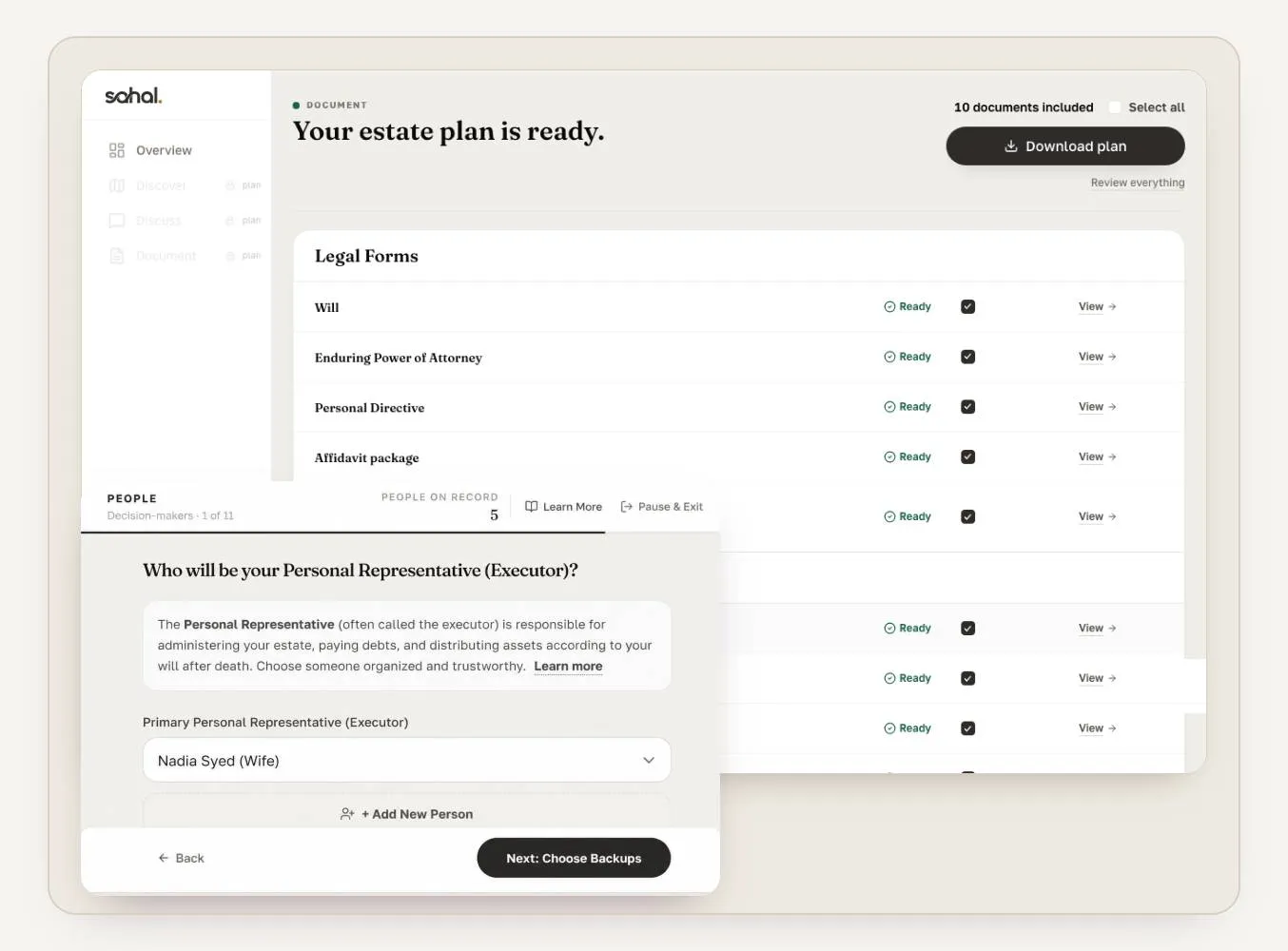
Think TurboTax, but for Islamic wills and estate planning: one question at a time, in plain language, walking you from what you own, to the people who will carry your plan, to a documented will, power of attorney, health care directive, and more.
I decided to call the app Sahal, as in ‘ease’ in Arabic, Urdu, Somali, and other languages.
MuslimMoney Letters
Thoughts on money and Muslim life, delivered to your inbox.