
An Islamic will is not enough
Amr had a properly drafted Islamic will, and his executor followed it. His heirs still did not inherit as intended, because a will does not control everything you own.
 ··1 min read
Amr died with a properly drafted Islamic will.
His executor followed it exactly.
But Amr’s heirs did not receive the Islamic distribution he intended.
How could a properly drafted Islamic will still produce the wrong result?
The will, after all, directed his executor to divide the estate according to the Islamic inheritance shares.
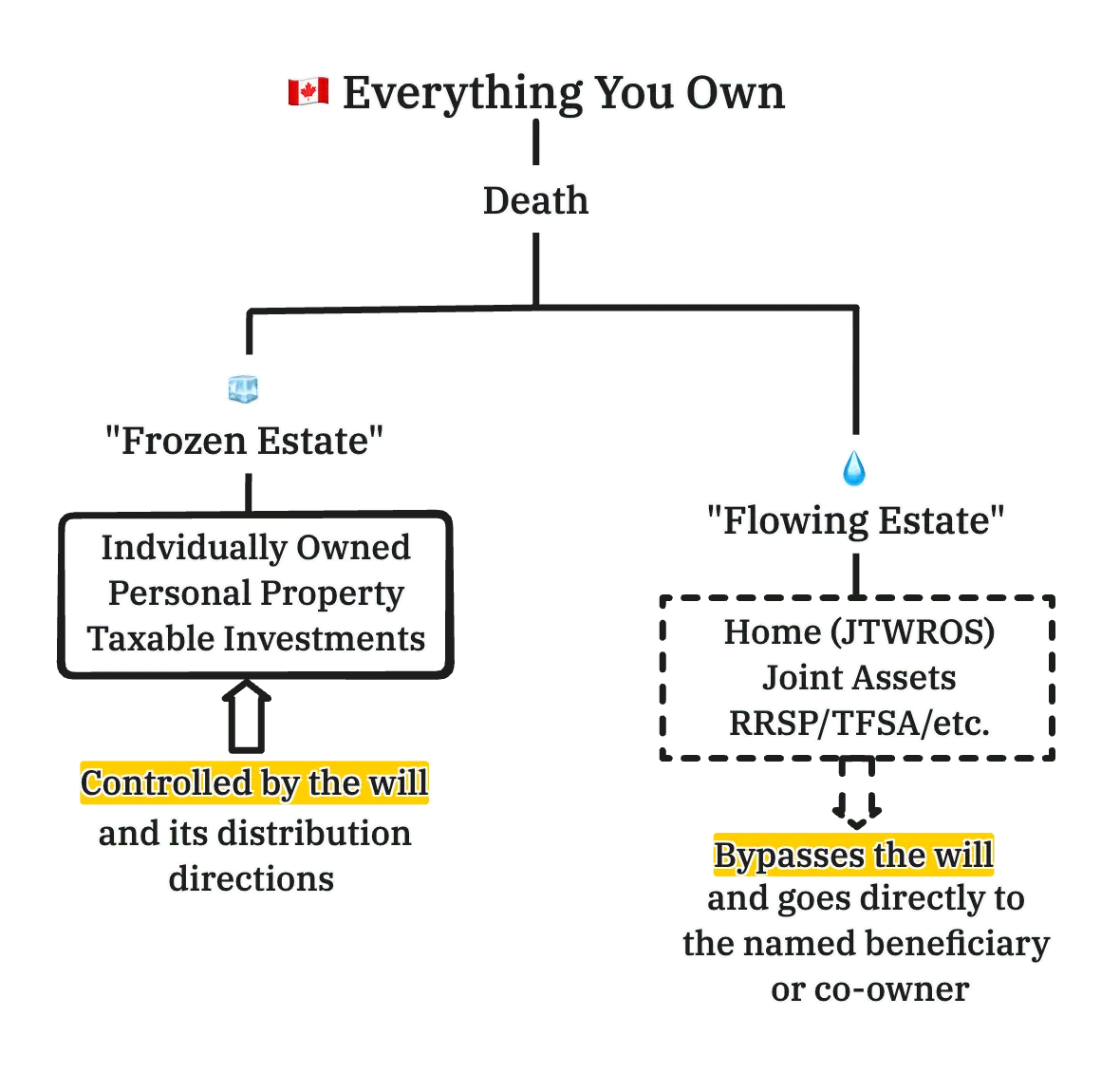
But the will could only divide what it controlled. In Canada, a will does not control everything a person owns when they die.
In fact, for many Canadians, one or more of their largest assets will pass outside the will. That might include a home owned jointly with a spouse or registered investment accounts with named beneficiaries.
Amr’s will divided everything it controlled correctly. But it controlled only part of what he owned Islamically, so the overall result was still wrong.
That does not mean an Islamic distribution is impossible.
It means the planning must go beyond the will.
Over the last few years, I have been trying to find a clear way to model this: what you own Islamically, where each asset will flow after you die, and what still needs to be put in order.
Once you can see that clearly, you can have the necessary conversations and put the right documents and arrangements in place.
An Islamic will is a document.
An Islamic estate plan is the whole picture.
MuslimMoney Letters
Thoughts on money and Muslim life, delivered to your inbox.