
How to Manage Your Money in 5 Steps
MuslimMoney START is a five-step system to riba-proof your money: structure your accounts, set your targets, automate, and take control for good.
In this article
 ··Updated ·7 min read
MuslimMoney START is a five-step plan for building your own personal finance system. It:
- guards you from riba
- helps you give more sadaqah
- sets you up for financial peace
🏗️ Step 1: Structure Your Accounts
Obstacle 1: Riba-First Structure
Most banks are set up to keep you dependent on credit. They offer overdrafts, credit cards, and loans that make you feel secure, but at the cost of riba. This “Riba-First” structure keeps you focused on the present, neglecting the future.
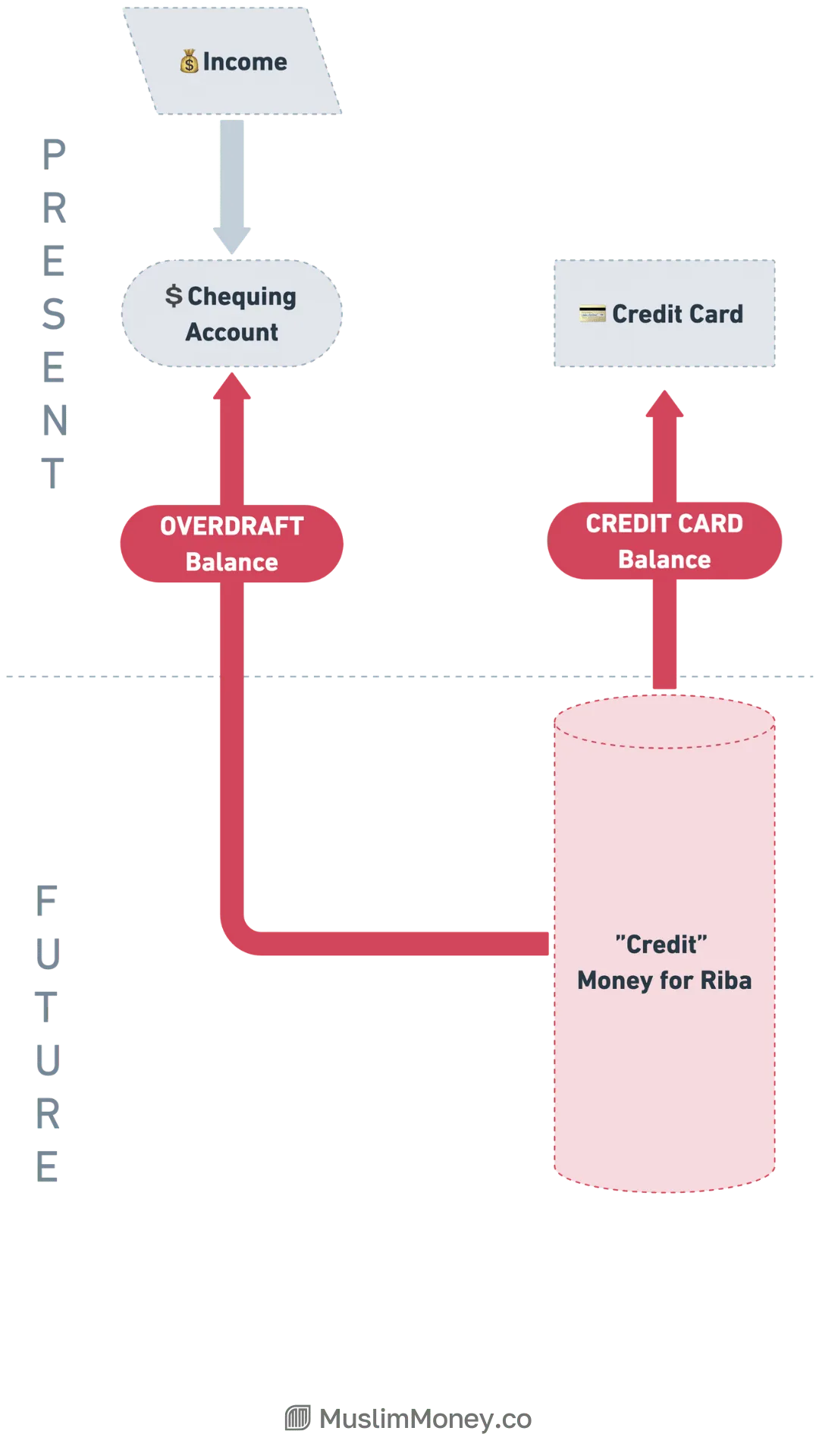
What to Do
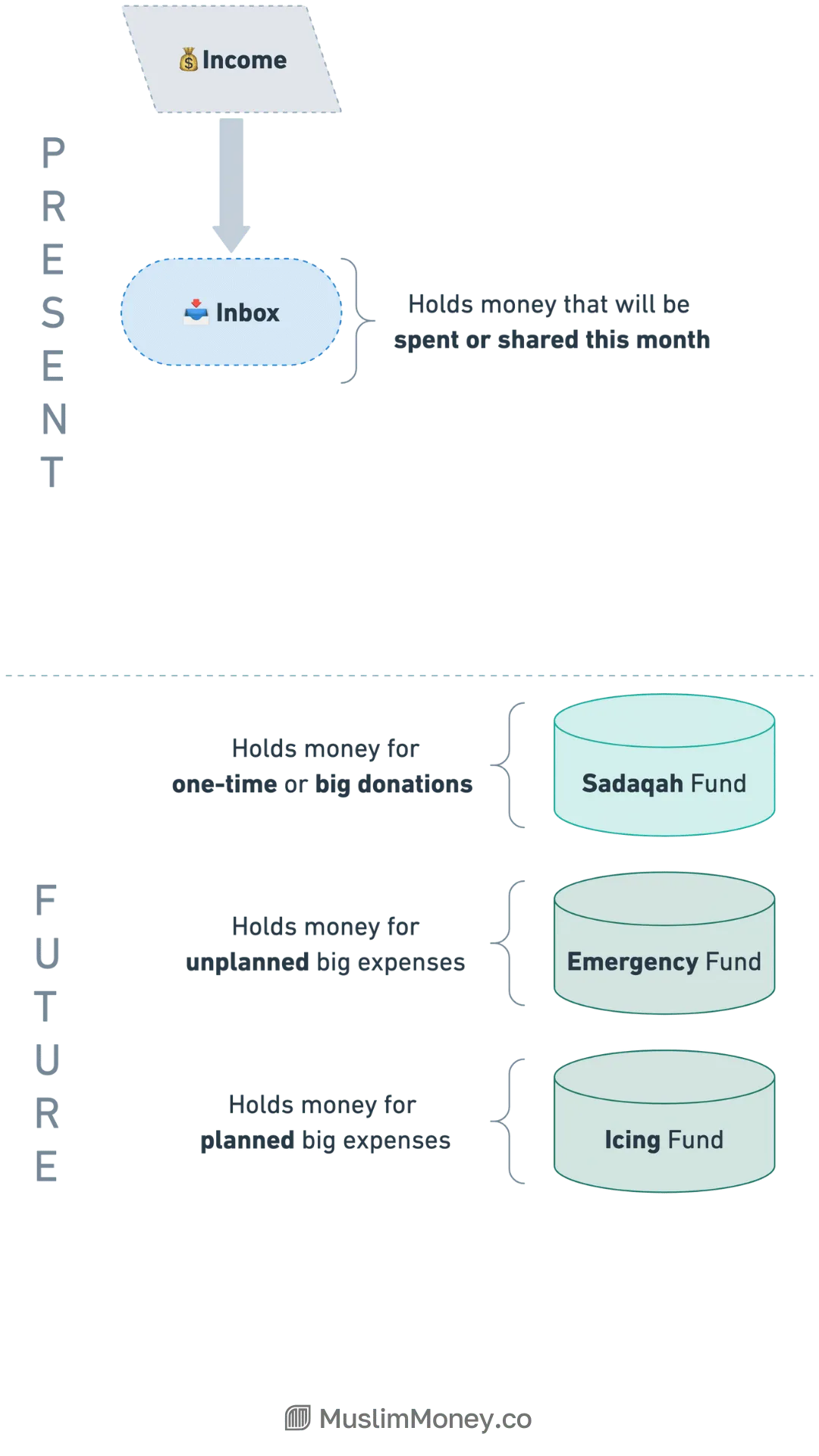
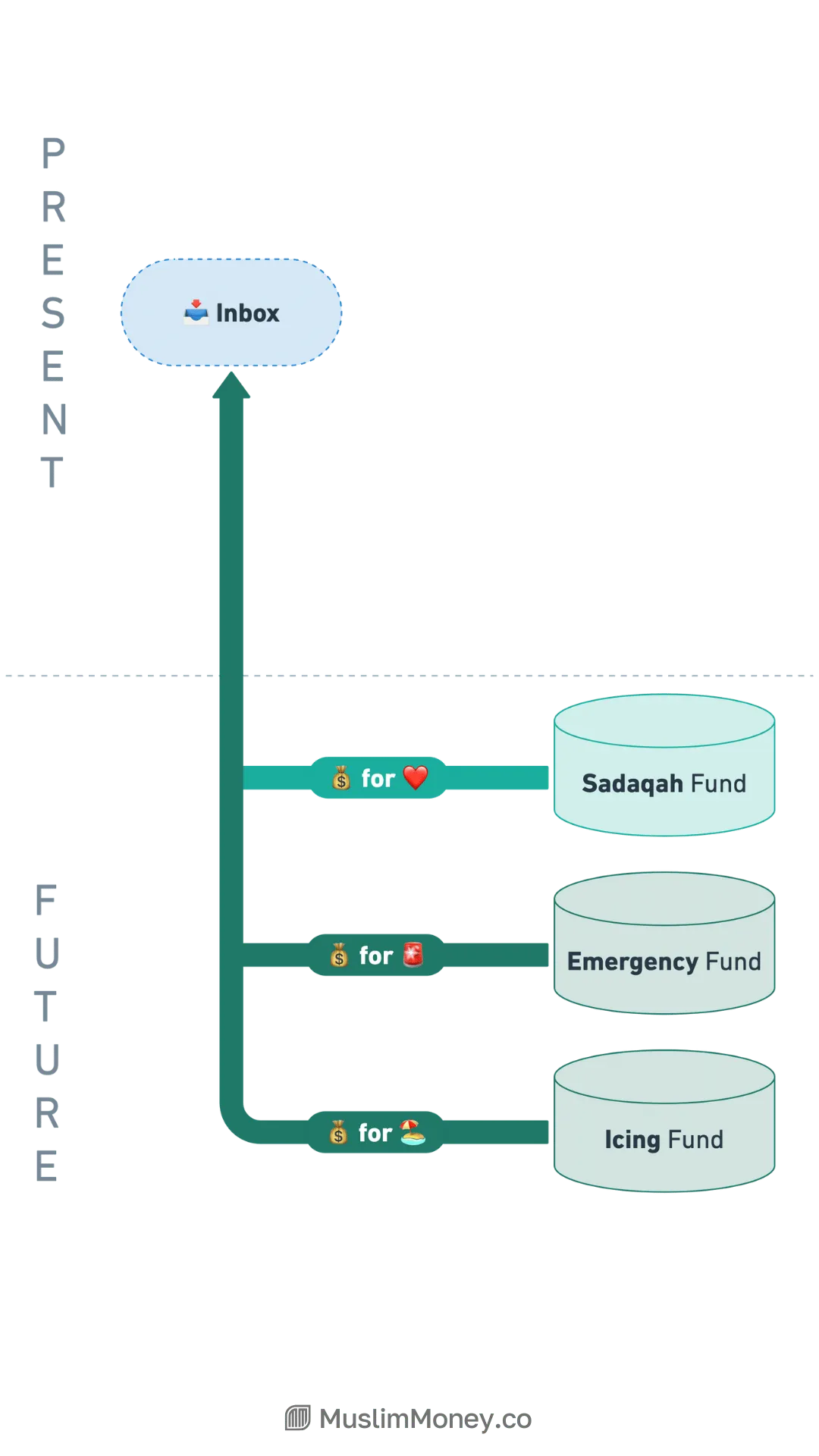
Open three new (free or low-fee) chequing accounts and name them: Emergency Fund, Icing Fund, and Sadaqah Fund.
These accounts will be the foundation of your Barakah-First structure, protecting you from riba and giving your money a clear purpose
| Account Name | Purpose |
|---|---|
| Inbox | Receive and dispense money. Holds funds for this month’s expenses. |
| Sadaqah Fund | Future donations |
| Emergency Fund | Unplanned large expenses. |
| Icing Fund | Planned large expenses (multiple accounts if saving for different goals). |
| Investment Fund | Invests assets for long-term growth (5+ years), held outside the bank. |
Why It Matters
By separating funds for emergencies, future expenses, and sadaqah, you create a system that prepares you for what’s ahead rather than just reacting to today.
🎯 Step 2: Target Your Percentages
Obstacle 2: If We Aim at Nothing, We Hit It Every Time
How much should you be spending, saving, donating, and investing?
Without clear financial targets, it’s easy to drift into a cycle of aimless spending, saving, investing, and sharing. The absence of intentionality leads to:
- Spending without clarity: Without clear targets, it’s hard to know whether you’re spending too much or too little. You might find yourself comparing unrelated expenses—justifying a splurge on dining out by cutting back on essentials. When income fluctuates, you’re left guessing how to adjust, leading to impulsive purchases, lifestyle inflation, or unnecessary cutbacks. This lack of clarity makes it difficult to prioritize what truly matters and effectively manage your financial responsibilities, including debt.
- Saving without strategy: Without a clear plan, savings often become misaligned with both short- and long-term needs. You might have money set aside, but not enough for unexpected emergencies or planned big expenses like vacations, home repairs, or major purchases. This unstructured approach can leave you scrambling when life happens, and it often leads to missed opportunities for achieving significant goals like retirement, education, or other future milestones.
- Sharing without freedom: Without clear targets, giving sadaqah becomes sporadic and uncertain. You might end up giving far less in sadaqah than you’re capable of—or not giving at all. This means missing the chance to honor your duty of generosity. Clear targets ensure that your sadaqah is intentional, consistent, and impactful, allowing you to give with a sense of purpose and freedom, rather than as an afterthought.
Without clear financial targets, it’s easy to get overwhelmed. There’s a lot of conflicting advice out there and much of it doesn’t work for Muslims.
What to Do
- Determine what your monthly income is. That should be easy if you’re paid a salary. If you have variable income, calculate your average monthly income from the last 12 months
- Decide what percentage of your monthly income you want to:
- spend
- save
- share
- Divide your spending percentage into:
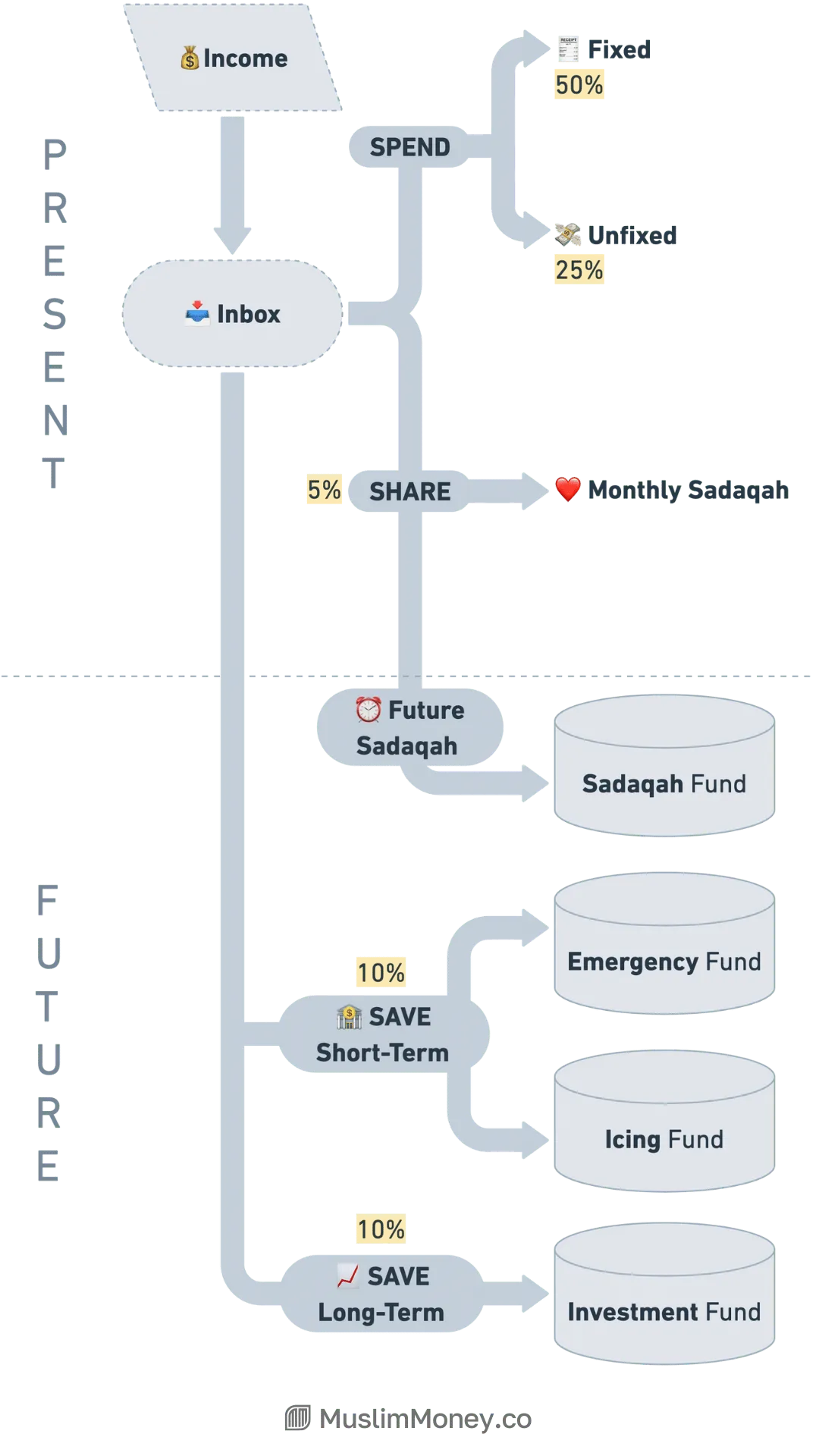
- 🧾 Fixed Spending (Housing, Transportation, Groceries, Debt Repayments, Recurring Others)
- 💸 Unfixed Spending (Eating Out, Retail, Gifts, Miscellaneous)
- Divide your saving percentage into:
- 📈 Long-Term Saving (Money you’re happy not to see for more than 5 years - retirement, children’s education, etc.)
- 🏦 Short-Term Saving (Money you might need in under 5 years for unplanned and planned large expenses - emergencies, big purchases, vacations, etc.)
- Divide your sharing percentage into:
- ❤️ Monthly Sadaqah (Money you commit to give in sadaqah this month through spontaneous or recurring donations)
- ⏰ Future Sadaqah (Money you set aside this month for sadaqah opportunities next month and beyond)
The percentages you aim to meet monthly are called your Target Flow Rates.
If you’d like help determining what your flow rates should be, you can work with me.
Why It Matters
Without clear targets, most people end up drifting—spending without purpose, saving without strategy, and investing without intention.
- Spending with Clarity: Targets guide your spending. No more guessing, justifying, or cutting back on essentials. You’ll know what you can afford and adjust confidently as income changes.
- Saving with Strategy: A clear plan aligns your savings with your needs. You’ll be ready for emergencies, big purchases, and long-term goals, without the scramble or missed opportunities.
- Sharing with Freedom: Defined targets make your sadaqah consistent and purposeful. You’ll give generously, fulfilling your duty with intention and impact—not as an afterthought.
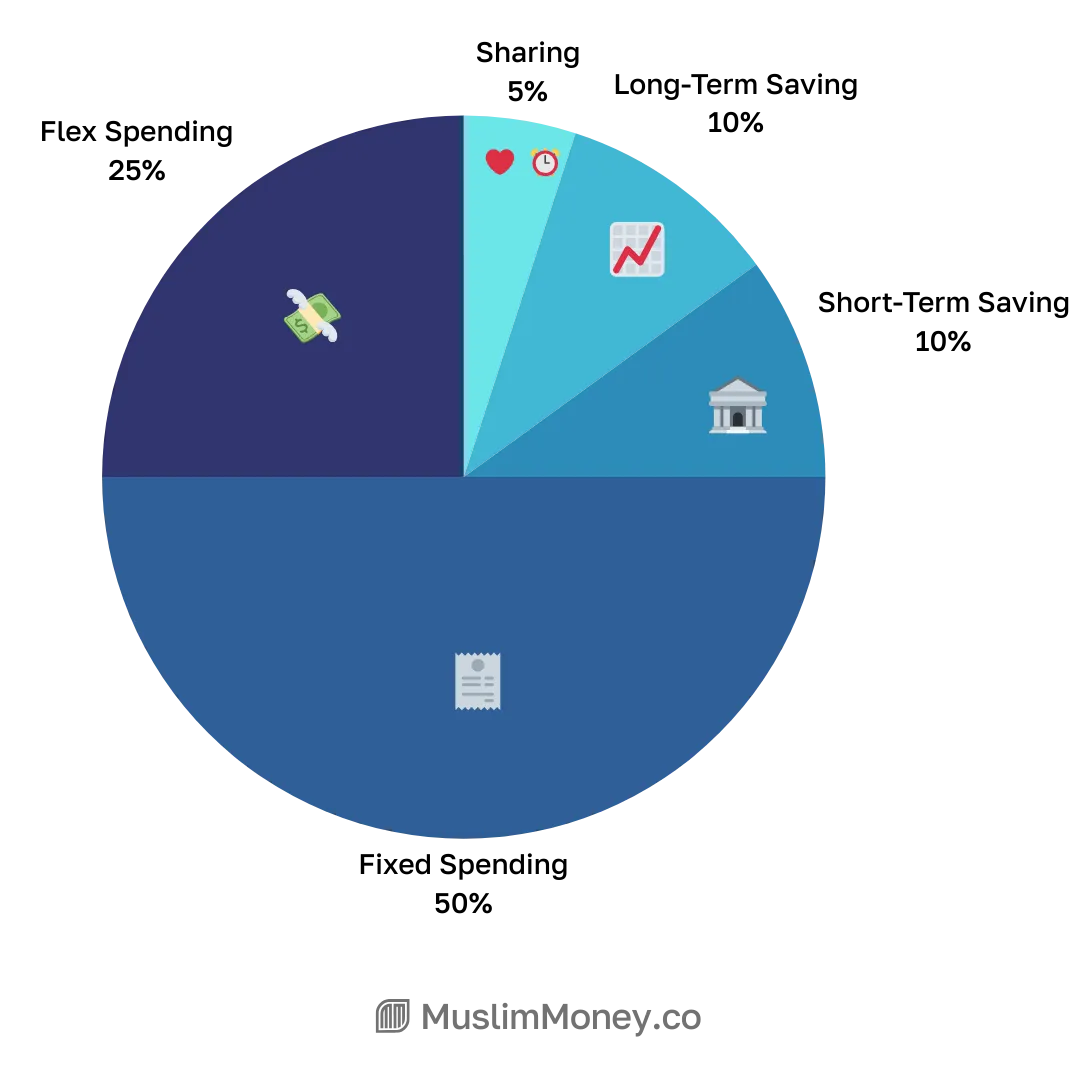
This is what that looks like in our Barakah-First structure.
🔁 Step 3: Automate Your Transfers
Obstacle 3: Consistently Hitting Targets is Hard
It’s easy to set goals but much harder to stick to them manually. Without automation, even the best intentions can fall apart due to forgetfulness or lack of motivation.
What to Do
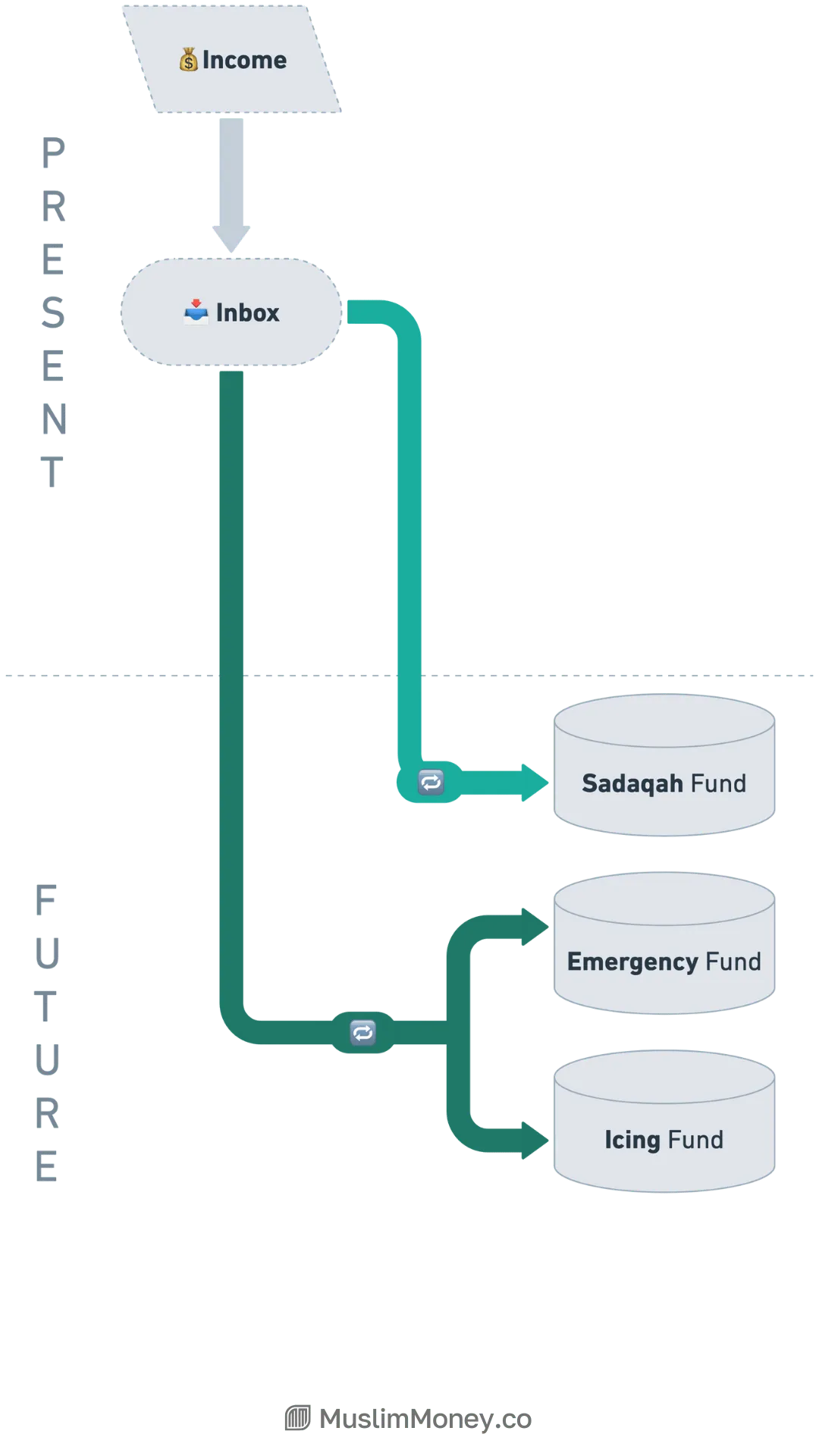
Set up recurring transfers based on your Target Flow Rates to your Emergency, Icing, and Sadaqah Funds.
Transfers between chequing accounts are free.
Automated transfers should be scheduled for a day or two after your paycheque arrives in your Inbox.
If your income varies, adjust transfers manually when you receive your pay.
Why It Matters
Automating your savings and giving ensures that good money decisions happen consistently, regardless of how busy or distracted you might be.
📝 Step 4: Record Last Month
Obstacle 4: Targeting Without Checking Leaves Us in the Dark
You can’t improve what you don’t measure. Without tracking, you’ll likely miss your targets and lose sight of where your money is going.
What to Do
In step 2, you set your Target Flow Rates. At the beginning of next month, you’ll need to determine your Actual Flow Rates - how much did you actually spend, save and share? How close or how far were you from your targets?
Start by choosing a recorder. The best one is whichever you’ll actually keep up with each month.
Right now, LastMonth does the job. Upload your bank CSV or enter your transactions by hand, and it shows what you actually spent, saved, and shared against your targets.
A spreadsheet or pen and paper works too; the habit matters more than the tool. And a fuller budgeting tool, Cruiser, is on the way. Join the Cruiser waitlist to get early access.
Why It Matters
Tracking helps you spot patterns, identify leaks, and make informed adjustments to stay on track. Without it, your financial decisions are based on guesswork rather than real data.
Unlike budgeting, which is a line-by-line plan for how you will spend, tracking is a record of what you actually did. It’s about what you did, not what you hoped to do.
🔧 Step 5: Tune for Next Month
Obstacle 5: We’re Not Perfect, and Things Change
Even with the best structure, life happens. Unexpected expenses, changing circumstances, or simply missing your targets can throw you off course.
What to Do
If you were on target, no action is needed. But here’s how you balance your accounts if over or underspent your target:
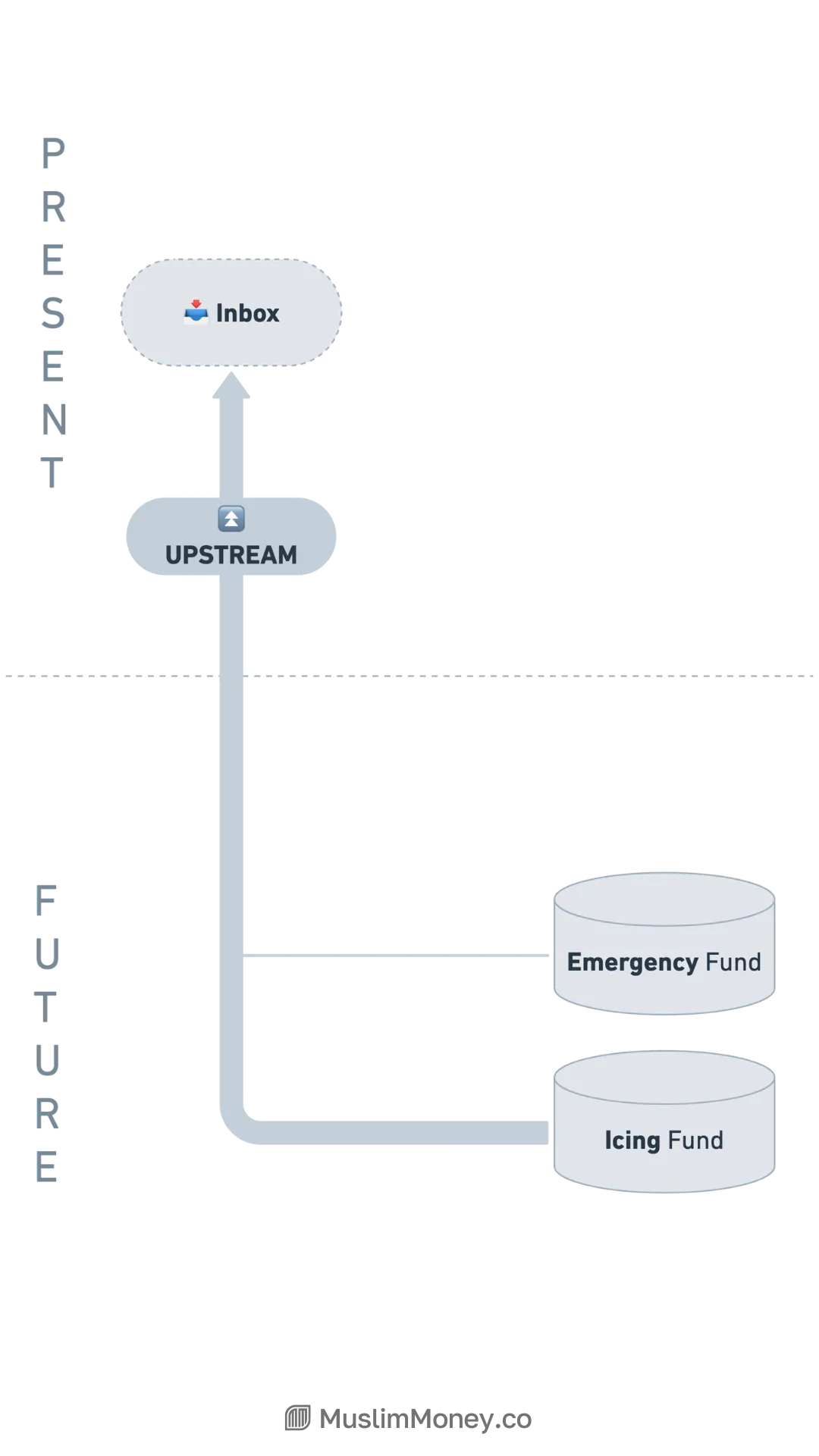
If you overspent last month, send money ‘upstream’ from one of your Barakah-First funds to cover the deficit. Pull from the Icing Fund before you pull from the Emergency fund.
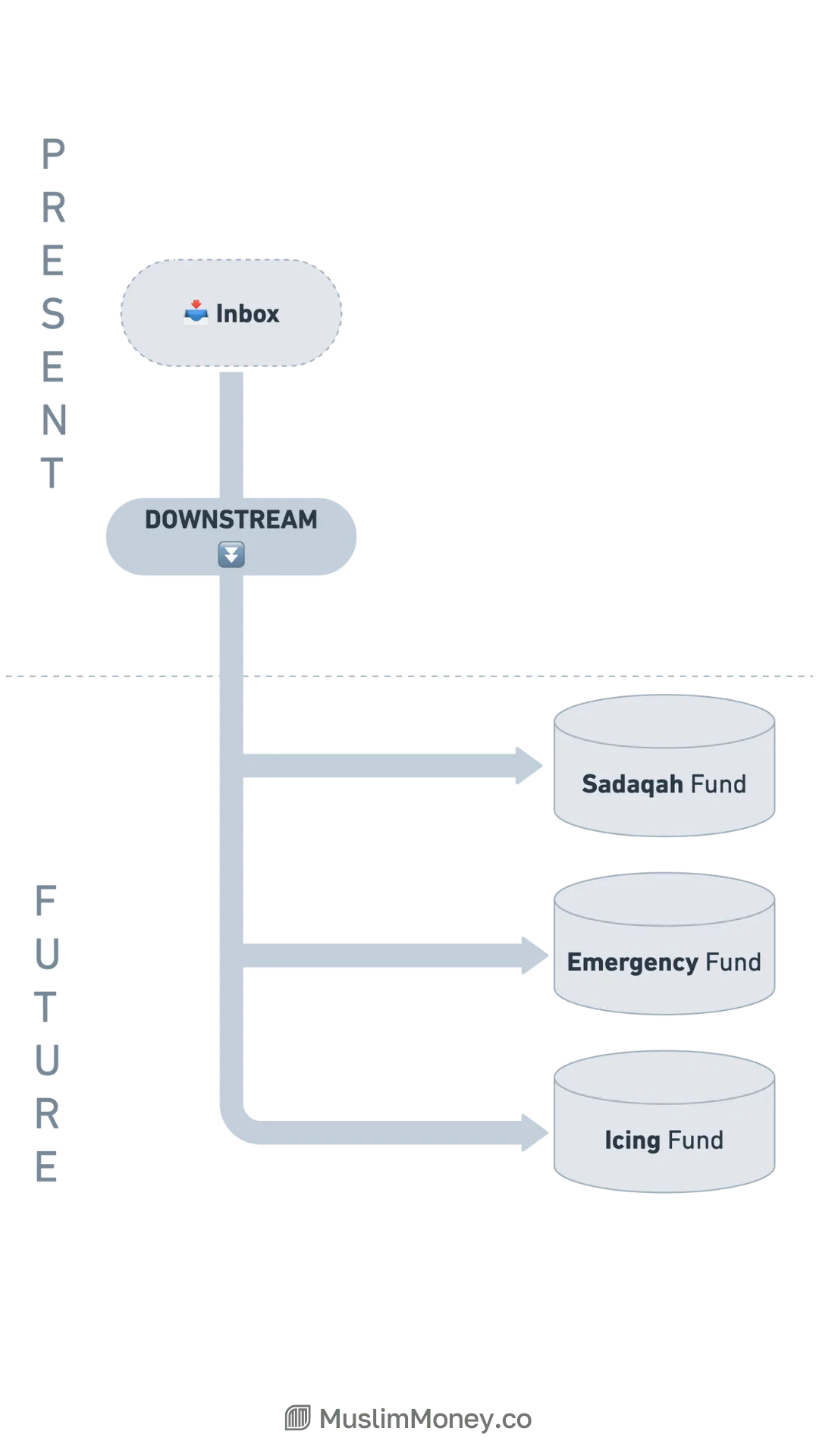
If you underspent last month, send your surplus ‘downstream’ to your Barakah-First funds. It’s best to have a pre-determined allocation for surplus (eg. 20% Fund, 40% Emergency, 40 % Icing Fund).
If your financial circumstances change and you need to adjust yoru Target Flow Rates, then be sure to tune your automated transfers.
Why It Matters
Tuning allows your financial plan to adapt as your life evolves, ensuring you’re always moving forward, even when things change.
MuslimMoney Letters
Thoughts on money and Muslim life, delivered to your inbox.